As many of you who regularly read our FB posts will know, in early October we learned via that same page that we were to appear before the MLC on November 18. This application for hearing was lodged by Tiraroa Bucknell-Webb, a current Committee of Management member. Tiraroa’s application to the Maori Land Court sort to have the 2020 AGM election results invalidated because voting was conducted by shareholding without a formal demand for voting by shareholding being put to the floor. Over the past ten years or so, voting by shareholding has become the preferred method for electing new committee members because it is considered a fairer system. In 2018, Tiraroa herself was elected to the committee using this method without any formal demand being put to the floor.
On Thursday, December 2, the judge delivered his decision.
:1. That in his estimation, the rules and regulations that govern the voting process had indeed been breached at the 2020 AGM and therefore the election was invalid.
2. That a fresh election for all three positions in accordance with the associated rules and regulations be conducted at the 2021 AGM, and that the minutes of that AGM be filed with the MLC shortly thereafter for his perusal.
3. That in the interim, the three affected members retain the full right to act as duly elected committee members. He also acknowledged the valuable contribution all three new members have made to the committee in their short tenure and that the cessation of their activities might undermine the committee’s ability to operate.
We accept, but are disappointed with this decision; the three affected committee members have worked hard this year to bring positive changes for our shareholders and community. Ella, our treasurer, has brought all accounting back under U7 control, tidied up all banking processes and consolidated our investments, Steven has advanced our papakainga project which is now sitting with TPK for funding consideration, and Luanne, our secretary, takes care of our comms and ensures U7 is represented at many of the local hui that concern Utakura and wider community.
By contrast, Tiraroa has not attended a committee hui since February 2020, abandoning her secretarial duties, her responsibilities to the shareholders who elected her, and the Provincial Growth Fund project, which she voted in support of, twice, then left to others to complete while ridiculing and undermining their efforts from the sidelines. Hence the reason for our disappointment.
However, we are grateful for the lesson learnt here; this committee is obliged to serve the interests of its shareholders, and that includes getting our processes right so those shareholders know what they can expect from us. Our priority now is to review our AGM protocols to ensure that shareholders are given every opportunity to participate meaningfully in the proceedings, so that when they leave the meeting they are very clear about what happened, why, and what comes next.
The 2021 AGM has been deferred to early 2022. The exact date will be confirmed, with 3 weeks clear notice, once we have certainty of how this will work under the Traffic Light Framework At this AGM there will be 6 committee vacancies, the 3 requiring new elections from 2020 and three up for rotation. If you feel you have the skill, the time, and the drive to bring to any project that will deliver benefits to our shareholders and community alike, nau mai, tono mai.
Renovations to transform Riverhead from a private dwelling to a fully functioning Bed and Breakfast kicked off in mid July with the intention to re-open at the end of September. Like everyone else, we now have to go with the flow until travel restrictions ease. That said, much progress has been made, and so far we have increased the footprint of the site to accommodate on site parking / create a turning area / have extra room for a marquee for special events and increased our onsite water supply. All the plumbing and service lines have been upgraded, cooking and water heating has been converted to gas, two full bathrooms added to the upstairs area, the kitchen is being completely upgraded and the ceilings and walls fully insulated. A new railing spans the entire verandah to make it safe for everyone using this area, and creating a garden cafe / dining area will be one of the last major construction tasks. We are currently awaiting materials and labour to complete some of these areas, but once those materials become available and Auckland drops to a level where travel is permitted, all the finishishing touches will be attended to and staff recruitment and training will begin so we can fling the doors open as soon as possible.
Hui-a-Tau / AGM
All going well, the AGM will take place on November 20, marae TBA. This is entirely dependent on us moving to at least level 2 by then, preferably Level 1, but we will update all our shareholders on this website and on our FB page if this changes. What is certain is that we will have to put into place procedures that adhere to new government guidelines and keep everyone safe. This may include a pre-registration option for shareholders only, which will reduce queuing. It will also give us an idea of attendance numbers – an important consideration if we have sudden level changes and have to contact everyone, or if we are at level 2. These measures are just a fact of Covid, so we ask for the forbearance of all shareholders as we work through the challenge of hosting events safely. We are also in discussions with the MLC about the implications of delaying the AGM if it is deemed unsafe to hold it on the proposed date. Please keep checking this website for updates.
Mahinga Kai-a-Hapori / Community Gardens
We are actively seeking keen gardeners to help with the planting of a community garden at the end of October and then assisting with maintenance on a regular basis. There is a bigger vision, so if you are keen to learn how to grow kai and learn new skills, this would be a great place to start. Please contact Shelly on 02102266505
Below is an excerpt for the Utakura Housing Report written by Kristen Maynard and published in September 2020. Although it has been written with very little in put from the Committee of Management, is does however, with uncanny accuracy, mirror every aspect of the body of work we have set for ourselves in our Ka Tu Kainga Rua housing policy.
Partner with and/or empower a local organisation to drive projects, with appropriate incentives and support
Building on this theme of working with the community and keeping it local, is the idea of partnering with and/or empowering a local organisation to drive the projects for their community – a sentiment that is consistent with MAIHI. In this regard, the Utakura 7 Incorporation and the newly formed Utakura 7 Atawhai Trust, appears to be well-placed to collaborate and co-invest with others, take up, project manage and/or facilitate future projects aimed at improving housing and wellbeing in the Utakura Valley.
As previously mentioned the Incorporation is the largest landowner in Utakura Valley and have been actively pursuing a range of opportunities to grow their economic base and provide training, employment and housing for their beneficiaries and the broader community. Although most of the land is in forestry at least until 2038, land identified as being suitable for housing developments has been put aside for papakāinga, social and kaumātua housing. Furthermore, once the lease expires on the forestry contract there will also be other opportunities to use the land in different ways and in ways that align with the communities’ broader aspirations. For example, by providing a space for growing and sharing kai and pursuing some of the local’s ideas on the creation and use of sustainable housing products (eg, hempcrete, and a solar power package) and for re-introducing kai that tupuna use to eat (eg, particular species of the Māori potato). Moreover, the Incorporation could also help to tackle some of the more gnarly issues facing the community such as, water supply and quality (eg, by lobbying local and central government to take action on the 2014 water reticulation proposal and other infrastructure issues, and to clean up the Utakura river).
There are two areas (in particular), identified through the course of writing this report, where the Incorporation appears particularly well placed to take up and drive projects for improving housing and wellbeing in the Utakura Valley. Firstly, the Incorporation could help to increase the numbers of quality, suitable and affordable housing in the community, in line with more general aspirations for sustainable housing and living, the creation of localised training and employment opportunities and the return of a thriving culturally revitalised community. Secondly, the Incorporation could help to sustain the quality of housing by being a central hub or by helping to facilitate the ongoing capacity and capability building among whānau to undertake basic maintenance and repairs on their kāinga and/or support the ongoing maintenance and repairs more generally. The success of these initiatives and the Incorporation’s primary role in driving these will likely be enhanced through a collaborative approach (eg, with key community leaders, TRAION, government agencies and NGOs and the private sector), and with appropriate government incentives and support.
Housing development Iwi, hapū and Māori organisations play a dual role in housing developments, both as investors and advocates for their people. This means that iwi/hapū/Māori organisations typically have to balance a range of socio-cultural and economic interests and responsibilities and to come up with housing solutions that accommodate all of these factors. Such a broad approach provides a number of benefits to the Government. Unlike property developers, iwi/hapū/Māori organisations are not only interested in growing capital but also in meeting the needs of their whānau, with the latter typically being the overriding concern. However, while focussed on ensuring that the housing and socioeconomic needs of their whānau are met, iwi/hapū/Māori organisations should not inadvertently take on the Government’s obligations under article three of Te Tiriti, without being duly recompensed in some way. For the Utakura Valley there appear to be several potential housing development opportunities, which could also meet broader community aspirations and wellbeing outcomes that the Incorporation could pick up and drive. The first group of opportunities involves the Incorporation’s aspirations to develop papakāinga, social and kaumatua housing, and tourist accommodation. The other opportunity is the potential to be involved in any future programme aimed at addressing the substandard and insecure housing in the Utakura Valley.
There are a number of different models and approaches that have been used for housing developments throughout the country and to incentivise and support Māori-led community-based housing developments. The particular approach that each community takes appears to be based on a number of factors, including the goals, aspirations and unique circumstances of the community and the specific housing development in mind (eg, papakāinga, social housing).
For the Utakura Valley, an analysis of their needs, strengths opportunities and aspirations would suggest that key considerations for housing developments (in addition to ensuring quality housing) would include:
• keeping the housing costs as low as possible to ensure it is affordable for whānau
• employing local tradespeople and training and upskilling whānau as part of the development (which would also keep costs down)
• using sustainable materials
• ensuring that the housing development is designed in a way that meets the social and cultural aspirations of the community.
Using kitset, modular and/or prefabricated homes for housing developments appears to be increasing in popularity, as they can be quite a cost-effective choice (particularly if building on-site using sweat equity and training schemes overseen by a qualified local tradesperson). These homes also come in a range of designs and ecofriendly options, and a number of organisations are now selling these. A recent case example is the Tallwood’s design system used for developing papakāinga on the Matekuare Whānau Trust’s ancestral whenua at Tāwhitiwhiti, Te Whaiti, Eastern Bay of Plenty. This design optimised rapid construction on-site (using modular pre-fabricated building components) and material usage, minimised construction waste, and applied standards well above the building code minimum. The emphasis was on ease of construction and sustainable building materials to develop a culturally appropriate, affordable, healthy and sustainable housing for whānau (Emery, Tapuke, Lyford & Martin, 2019).
The transference of ownership of suitable surplus Kāinga Ora and other Crown-owned houses to the Incorporation is another potential solution for increasing the supply of quality housing in the Utakura Valley. Depending on the circumstances (eg, if the houses are intended for disposal and the Incorporation’s intention is to use these for social housing) then a case could be made for transporting these houses onto the whenua at no cost. This is because I understand that the cost of demolishing the house is typically slightly less or about the same as transporting the houses to another site. I am also aware that this has been done before in Te Tairāwhiti and more closer to home by Ricky Houghton’s He korowai Trust, so there is a precedent for this. The Government could also incentivise and support Māori-led community-based housing developments by (among other things): • releasing vacant Kāinga Ora and other Crown-owned land that is not being used, and negotiating a suitable housing solution and arrangement for that land with iwi/hapū/Māori organisations • allocating a specific amount of government funding toward each new build • putting in place temporary housing solutions for whānau (such as transportable pods that are built to council specifications) while houses are being repaired or built • undertaking research into prefabricated, modular and kitset homes that could be utilised in housing developments • supporting iwi/hapū/Māori organisations to navigate the development process and to coordinate the various agencies and professionals involved (Kake, 2019) • helping iwi/hapū/Māori organisations to establish good working relationships and placebased models with local authorities that support whānau housing aspirations (eg, special housing zones, the provision of staff to help develop and implement a housing plan) • co-designing a range of suitable financial products, such as: o bridging finance for housing development start-up costs o infrastructure subsidies o interest free loans o 100% Government guaranteed loans
Some iwi/hapū organisations could potentially take on the role of a lending institution if the Government was prepared to underwrite the loans. Such a role has been taken up overseas by some tribal authorities with sufficient capital, utilising the 100% government guarantee to loan to tribal members and re-invest the profit made from interest payments back into the community through the provision of social and affordable housing. For iwi this could also potentially open up opportunities for cross-rohe investment and Government co-investment that compliments social programmes (such as home ownership and financial literacy). See: https://pureadvantage.org/news/2018/11/20/innovative-financing supporting-housing-aspirations-on-maori-land/.
The Incorporation, could also work with TRAION, Te Hau Ora O Ngāpuhi, Kainga Ora and other relevant government agencies to come to a suitable arrangement for providing social housing for their whānau on their whenua. The Incorporation could also go directly to private lending institutions (such as Westpac) to work with them on a financial package that would best support whānau to progress into home ownership on whenua Māori and meet broader community aspirations. A case in point is the Ngāti Koroki Kahukura papakāinga development, which involved working with Westpac to establish a model that would create greater opportunities for lending and therefore move whānau more quickly into new and affordable homes on their ancestral land. The Iwi utilised their land to provide the equity for whānau, which could then be used as leverage into share-equity agreements. The houses were built on freehold land titles and while each whānau had their individual piece of whenua and mortgage, there was a common wastewater system, water supply and community garden, making the papakāinga environmentally sustainable as well. Te Hau Ora O Ngapūhi is a Community Housing Provider and also provides Manawa Ora housing assessments to support whãnau with tamariki to create warmer, drier and healthier homes. As such, they are a key player in the housingarea in Te Tai Tokerau and it would be beneficial to involve them, at least in the initial discussions, moving forward. See: https://www.westpac.co.nz/rednews/property/relationship-with-iwi-leads-to-innovative-papakainga-shared-equitymodel-for-whanau/.
At the end of the day, each community, because of their unique circumstances will require a tailored package of solutions, interventions and incentives to meet their particular needs and circumstances. Some of these packages may also include initiatives such as progressive home ownership schemes (eg, shared equity partnerships and rent-to-buy options) and/or integrated social and financial literacy support. Community development to sustain housing. In addition to driving housing developments to increase the supply of quality, affordable and sustainable housing in the Utakura Valley, the Incorporation could also potentially play a central role in supporting the ongoing maintenance and repairs of the houses. The Incorporation’s goal to employ their own local tradespeople for their housing developments and to up skill and train whānau in housing construction and the various trades associated with this, would place them in a prime position to support and/or directly service home maintenance and repairs on an ongoing basis, with some planning and support. It would also potentially create sustainable employment.
Another idea for keeping on top of maintenance and basic repairs is for the Incorporation and/or hapū leaders to plan community maintenance/repairs weekends (every so many years). This would likely involve bringing the community together (as what frequently occurs with urupā clean-up weekends) to collectively identify and work on repairing/maintaining a group of whānau homes. This idea aligns somewhat to Alva Pomare’s vision of the Utakura Valley moving forward in unison and growing together as a hapori through initiatives and models that build the collective capability and capacity of whānau to live sustainably. While the community would drive and provide the sweat equity for an initiative of this kind, TRAION and/or TPK/the Ministry of Housing and Urban Development (HUD) could also contribute through perhaps the provision of resources (eg, paint).
Summary Empowering a local organisation to drive housing projects, like the Utakura 7 Incorporation that is committed to improving community wellbeing, has land and other resources available for housing and has been actively pursuing development opportunities, increases the likelihood that the project will succeed and be sustainable. Moving forward it is suggested that, as a first step, the Incorporation, hapū/community representatives, TRAION, and relevant government agencies (suchas, TPK, Te Tumu Paeroa, HUD, Kāinga Ora) get together to have an initial discussion on the various potential housing projects (ie, papakāinga, social and kaumatua housing, tourist accommodation and substandard housing), the options available for progressing these, respective roles and contributions, and next steps.
Utakura 7 is planning to start the first of many new papakainga projects this year. While this may bring a sense of excitement and create a pathway home, it is important that we balance the desire of our whanau to return to their turangawaewae with our collective duty of Kaitiakitanga. To this end, we have decided to minimise the effects of intensified sewage discharge by using a worm based system. Below are the details of the system we have chosen to use.
The Biolytix BioPod – Naturally aerated wastewater treatment
At the heart of the Biolytix wastewater treatment process is the BioPod. The BioPod is a unique and patented method of treating household wastewater to a level that is suitable for beneficial irrigation of lawns & gardens. The BioPod works by mimicking the way nature breaks down waste which is far more efficient and less energy intensive than conventional wastewater treatment.
Why use high energy machines when nature can do the work for us?
Inside the BioPod
Inside the BioPod is a layered filter bed, engineered to quickly separate the solids from the liquid sewage and to provide a stable environment for the micro and macro organisms that break down the separated solid waste into a stable humic product. The organisms, including tiger worms introduced to the BioPod on commissioning, ensure the entire filter bed is naturally aerated, eliminating the smell often associated with septic tanks and with mechanically aerated wastewater systems. The organisms feed on the waste exactly as they would in nature. By consuming the waste the organisms remove the vast majority of contaminants from the wastewater.
The engineered ecosystem inside the BioPod can be sustained indefinitely with solid material repeatedly broken down and resulting humic material becoming a part of the filter and part of the filtration process. The worms and other treatment organisms simply breed and replenish themselves. Because of the relative lack of mechanical components in the filter bed the BioPod only needs one annual service (most competing systems require 3-4 services each year). Near the bottom of the tank is a geofabric layer, which removes any residual fine solids larger than 80 micron size. This purified and filtered water is then ready to be pumped into the garden for further polishing and where it can be utilised as a beneficial irrigation resource.
A tiny “fish tank” air pump for ventilation
A major advantage of the BioPod is that it is not reliant on complex or expensive machinery to run. It has a minute, but robust, low energy and low volume air pump which ensures the ambient air in the BioPod is constantly refreshed providing an abundance of available oxygen supply for the aerobic organisms that do all the work in the filter. It blower only consumes 0.12 kWhours per day (approximately 3 cents per day) which is very low compared to other conventional aerated wastewater systems, which typically consume 10 to 20 times this. In addition to this the air pump is whisper quiet. We have field and factory tested installed BioPod and recorded maximum noise of less than 40dB from a distance of just 1m. By comparison the blowers used on aerated wastewater systems can be very noisy and can operate 24 hours a day.
An industrial strength irrigation pump
In this middle of the treated wastewater compartment is the disposal pump which operates on demand (typically less than 30 minutes per day) to dispenses treated effluent from the BioPod out to the irrigation system. The disposal pump is powerful enough to pump more than 50m vertically which allows even the most topographically challenging sites to be irrigated.
A single, compact tank
All wastewater treatment is completed in a single, lightweight, polymer tank which makes the BioPod the most compact biological treatment system in the world that we know of. The single light weight tank means that it is it easier and cheaper to transport, less disruptive to install and is visually unobtrusive when installed in your backyard.
Despite the light weight the polymer tank is tough and is engineered to exceed all the durability requirements in the Australia New Zealand septic tank standard 1546.1.
To put the relative size in perspective a typical sand filter system (with a septic tank, sand filter bed and pump chamber) would physically take up an area approximately 9 times larger than the Bio-Pod. A typical aerated system will require an area 2 to 4 times the size of the BioPod.
Audible-Visual Alarm
The BioPod is extremely reliable but has an audible and visual alarm installed to let you know of any irregularities within the system.
Utakura 7 Incorporation and Utakura 7 Charitable Trust
Our Vision
That the shareholders and beneficiaries of Utakura7 shall live prosperously in healthy, thriving, well-educated communities always strong in the knowledge of who we are while holding tightly to the teachings of our tupuna and our whanaungatanga
Background
The old whakatiki says
“Ka hinga kainga tahi, ka tu kainga rua”
When one house falls, another is stood to take its place
Whanau that hail from our little corner of Paradise are humble people with simple needs. No matter where they reside and no matter how long they have been away and no matter that they may have never lived in the valley. Many of them share a simple aspiration. And that is to live on their whenua tupuna, to return Home to their turangawaeawae.
Many years ago, a Papa Kinga policy was developed by Utakura 7 Incorporation as a way to support this aspiration. However, the barriers to realising this have been so high and so many, that we yet to receive a single application. The inability of whanau to navigate the housing regulatory environment coupled with the challenges of obtaining sufficient finance to build housing that is secured against the house itself, has resulted in zero applications to this policy.
All the while, our whanau in the valley continue to live in what can be best referred to as extremely challenging conditions.
And we would go as far as to say that intergenerationally, housing conditions for whanau have markedly worsened.
Whānau from the Utakura Valley belong to the following hapu:, Ngāti Toro, Te Ngahengahe, Ngāti Hao, Te Honihoni and Te Popoto, Being able to live on our whenua Tupuna has been a long-held dream of many of the shareholders of Utakura 7, Sadly the pathway to this dream has been one that has been fraught with so many challenges that only a few have been able to complete this journey. In recent years the struggle of daily life has become so daunting that most have completely given up on this dream.
We understand that one of the preliminary findings of the draft interim report on improving housing and wellbeing in Utakura is that the essential housing repairs programme does not cater or meet the needs of those whanau living in the worst situations of all – where their whare are in such a state of disrepair that it is more economical to demolish it. The draft report goes further to suggest that there is a need to immediately address this gap (ie, to replace the most derelict whare because whanau will continue to live in these whare regardless of the condition) and ensure that a broader and more flexible range of options is available to deal with diverse Maori housing needs. Utakura 7 Incorporation has been mentioned as being “well-placed to take up and facilitate future housing projects in the Utakura Valley to fill this gap, with appropriate incentives and support from government agencies” It also implies that Utakura 7 Incorporation is well placed for the purposes of improving housing and wellbeing for our hapori, hapu, and whanau.
A final report is due at the end of August 2020.”
During the COVID-19 lockdown, A snapshot of the Utakura and Horeke community found 311 people living in 80 dwellings. Approximately 20% of these people were recorded as kuia/kaumatua, 41% pakeke and 39% tamariki. Furthermore, a number of these dwellings housed multiple generations of whānau and/or large numbers of people within the one whare (for example, there were 14 people residing in one whare, and in another there were 10 tamariki to one pakeke).
The actual total of dwellings ‘of all types’ including cars, vans, caravans, and lean-tos came to 121.
Despite variations in population data, the various data sources are consistent in indicating that the Utakura Valley community has a predominantly Māori and older population, who receive lower incomes than the national average. The data also indicates that the population has slightly increased over the years.
Recent statistical analysis of deprivation data also paints a dismal picture of the level of deprivation across multiple domains (such as employment, income, crime, housing, health, education, and access to amenities) within the Northland region and in particular the rohe of the Far North District Council. This data shows that the Northland region has the ‘most severe’ deprivation scores across multiple domains, in comparison to other regions
Despite these conditions, it appears that whānau are increasingly returning to their whenua from the cities and some predict that this is likely to increase with all the global changes that are happening at this time. There is also concern among some of the locals, that whānau returning home, often move from struggling to meet the high costs of living in the city on a minimum wage to living off the land with nothing – some living in cars, vans, or dilapidated shacks with very young children
Nga Whainga – Our Goals
Given the desperate situation outlined above, urgent intervention is required to remove the barriers that prevent us from achieving our primary goal which is to make our vision a reality. This intervention is simply to return to Tikanga that worked for us in the past.
Hoki kei muri, ki te neke anga mua
Look to the past, to find the pathway forward.
Kei te pupuri pumau nga akoranga o koro ma, o kui ma
That we will retain always, the teachings and Tikanga of our Tupuna
Ka tipu te whanau, kia puawai, kia whai hua
That we will empower whanau to thrive and be resilient.
This approach is effectively rolling back the way we look at our world and seeks to return to a time when housing was considered a collective, not an individual responsibility. In embracing this Tikanga we will be honouring our tupuna while exercising our collective Tino Rangatiratanga.
The Way Forward – Ka Tu Kainga Rua
The housing needs of our whanau cover a wide spectrum. From homelessness to the aspiration of ownership. From overcrowding to repairs to make them fit to live in. From living in harmony with the land to living close to mahi.
The only solution is to build new, warm, dry, healthy, sustainable homes.
Short term, Transitional cabins on Marae land for whanau with urgent needs.
Medium term, new social housing built on identified Utakura 7 Papakainga sites, offered to whanau on long term lease.
Long Term. support for whanau to make applications to our existing papakanga policy
The criteria for placing whanau in any housing will be as follows
Need
Previous contribution to the community
Future contribution to the community
Skills and lived experience that they are willing to share.
Financial resources
We have modest financial resources and management competencies within the board of the Incorporation We also have offers of assistance from whanau with management and trade experience in the construction industry. We will also seek funding support from whanau whanui, third parties and government Agencies.
Our Stepping Stone Pathway to papakainga
Transitional Housing, We will construct 6 Warm and Dry transitional Housing Cabins for 6 of our whanau with the most urgent housing needs and place them at two marae within the Utakura Valley. This will provide modest individual accommodation for use with the marae kitchen and toilet facilities. They will pay a modest rent and contribute to the marae expenses.
We will assess the medical, material, and social needs of these whanau and support them with the help of third-party agencies, such as Hokianga Health, Whanau ora, MSD, and NISS, to find solutions that work for them.
We will transition them into Warm, healthy homes in New Papakainga that we will build.
5. Whanau that wish to make application to our Papakainga Policy will be given support to make this application and assistance to make the dream of home ownership a reality.
World Famous in New Zealand: Hokianga’s Māngungu Mission House
Perched on a hill overlooking the Hokianga Harbour, and right on the Twin Coast Cycle Trail, this neat and satisfyingly symmetrical cottage has a big history for a building so small.
Built in 1838 by the multi-talented Wesleyan Reverend John Hobbs, it was the venue for the second, and largest, signing of the Treaty of Waitangi on February 12, 1840. In a rare gathering, nearly 80 chiefs came together for long discussions, interpreted by Hobbs, with Governor William Hobson.
Māngungu Mission House was built in 1838 and was the venue for the second, and largest, signing of the Treaty of Waitangi on February 12, 1840.
Then came the signing, which was witnessed by what must have been an unprecedented crowd of 3000 people. Inside, you can see a copy of the Treaty, lying on the actual, if rather spindly, mahogany table that the original was signed at on that momentous day.
The Celtic cross and church at Māngungu.
WHY GO?
Because, as if the Treaty signing isn’t significant enough, Māngungu was also the site of the first pub in New Zealand (although it wasn’t licensed). Less cheerfully, the first execution in the country took place here too, on low-lying Ruapapaka Island nearby, scrubby and uninhabited except for the murderer’s grave. An argument over a local ferry fare led to the passenger’s murder and the first trial of its kind in New Zealand.
There are more firsts to learn about from the enthusiastic people at the Mission House: honey bees were introduced here by Hobbs’ sister Mary Bumby, who brought two straw hives with her from Britain. The bees did well, and Māori became the first commercial beekeepers. The country’s first Post Office was set up at Māngungu – it took 143 days for a letter to get to London – and, though it’s hard to believe now, with the Hokianga looking so beautifully peaceful, the first-ever shipyard was located here.
Both the Mission House and church offer views over Hokianga Harbour.
INSIDER TIP
The building is well-travelled: it was later moved to Onehunga to be used as a parsonage and then a house, before being returned to the site in the 1970s and restored. Don’t miss the photograph of John Hobbs, looking like a young and bespectacled George Clooney.
ON THE WAY/NEARBY
Back towards Paihia, there’s more historic architecture at Waimate North, where the Mission House, Anglican this time, is rather grander. It’s quiet now, but was once the centre of a hive of activity. It sits in a lovely garden, surrounded by the only bit of New Zealand scenery that Charles Darwin admired.
The building is well-travelled: it was later moved to Onehunga to be used as a parsonage and then a house, before being returned to the site in the 1970s and restored.
HOW MUCH?
Adults $10, children (up to 18 years) $3.50, students $5 – special events may cost more. Open Saturday-Monday 10am-4pm, three guided tours are scheduled daily.
BEST TIME TO GO
Choose a clear day to appreciate the long and lovely views, and consider timing your visit to coincide with the Tiriti Commemorations held every February 12, a day of karakia, kōrero and kai. See mangungumission.co.nz
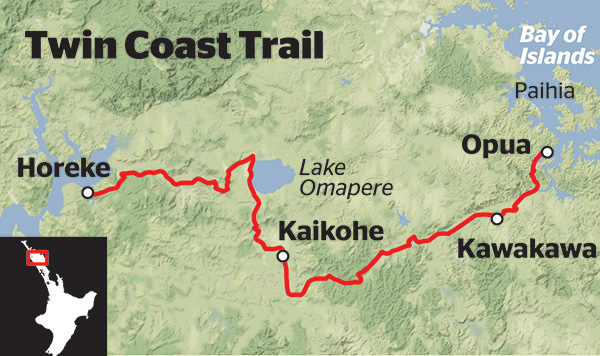
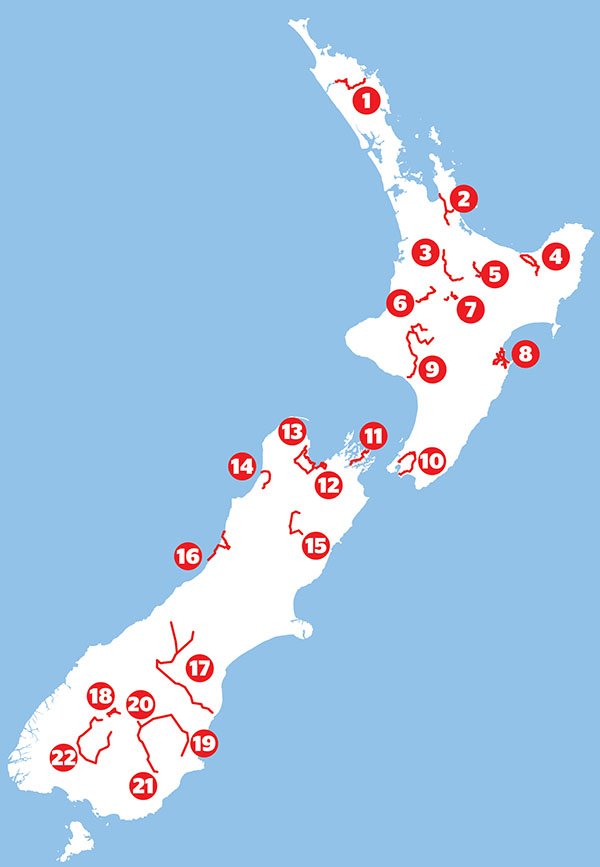
After many missed deadlines the northern-most of the 22 Great Rides that make up the New Zealand Cycle Trail is open all the way from Opua on the east coast to the Hokianga Harbour. Phil Taylor reports from the Twin Coast Cycleway. By Phil Taylor (reposted)
There were real concerns this trail might never be finished from coast to coast. And that would have been a shame on more than one count. It’s a very nice ride, the only one to cross the country and Northland could do with the dosh.
I’ve been visiting a family bach in the Maniototo, smack bang on the Otago Rail Trail, every second year for decades and have seen what that bike route means to the region. It’s a river of gold. The 84 kilometre Twin Coast Trail can do something similar for the north, particularly the poorer west where few visitors venture and where jobs are scarce.
Down south, B&Bs, lodges and cafes popped up along the inland Otago route. Pubs shook off their decrepitude. Some literally rose from the dead. It made enterprise possible at any age. Back when the rails were freshly pulled up, the youngest generation of our family spent many holiday hours collecting rail bric-a-brac, prized booty they arranged for display on a fence made of railway sleepers. Now, on sweltering Ida Valley days, they do a healthy trade as trailside vendors of homemade lemonade.
So it was disappointing two years ago to find Northland’s trail was hamstrung. Would it ever be finished? Someone had painted a sign on a fence at a trail entrance that effectively told visitors to sod off. That was during the “rock star economy” period. I was in the north to write about the economy that was only whispered about in thriving cities and the corridors of power – poor, non-dairying rural (This was a time of peak dairy prices). Though not a panacea, the Otago Rail Trail experience strongly suggested the Twin Coast Trail was too good an opportunity for Northland to miss.
And it wouldn’t just be about money. A positive story has its own value in parts where these are rare.
So I went back in early December to check progress, hoping for the best but prepared to be disappointed again. I knew the latest deadline for the trail to fully open (mid-2016) had been missed.
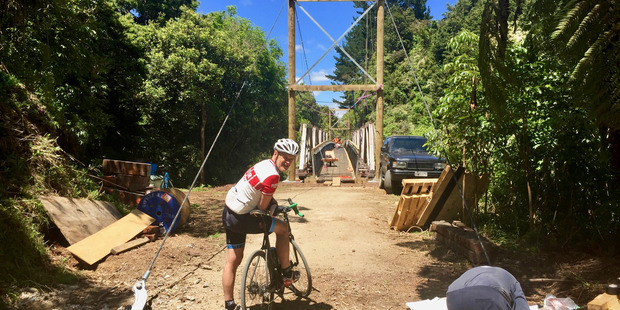
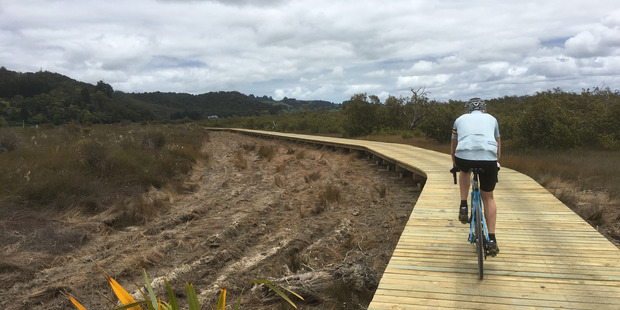
I’m pleased to report that I found it about to fully open. A cycling mate, The Lazy Plumber, and I rode it from east coast to west, hopping over a few locked gates, skirting around a couple of impressive bridges where workmen were adding the final touches, and jumping off the end of a fantastic 1.2km boardwalk – the longest on any of the cycle trails – near Horeke (look it up) where the exit ramp hadn’t been built.
It was due to open, coast to coast, before Christmas. The official ceremony is set for late this month. John Key was to have done the honours but won’t be now. His office told us last month that as he won’t be PM or Tourism Minister when this is published, it wouldn’t be appropriate for him to comment.
Pity, because it would have been a nice full stop, as the trails are part of the network that came of the jobs summit in 2009. Proposed by Key, the bike trail was a surprise 21st item – and a rare tangible one.
Check out the headings of the top five summit ideas:
Retain and Upskill – the nine-day fortnight.
Intra-national migration (something to do with a seasonal work marketplace).
Keeping people in education and creating jobs through education and training.
Improve matching for supply and demand for training.
Redundancy and transition support programme.
Pity, too, because Key had the right words in February 2014 when the trail reached deadlock. All the trails involved negotiation and compromise, he said. “You have to remember that cycle trails are good for economic growth and good for jobs and so it is in the interests of the local community to make it work.”
The Twin Coast Trail is one of the last of the 22 Great Rides to be finished. Land access – general annoyance that land taken for the railway was not returned after the trains stopped rolling – was the sticking point.
Talk and compromise (take a bow, Adrienne Tari, the Far North Council’s trail co-ordinator) and measures such as building fences as a buffer to private land, got the job done.
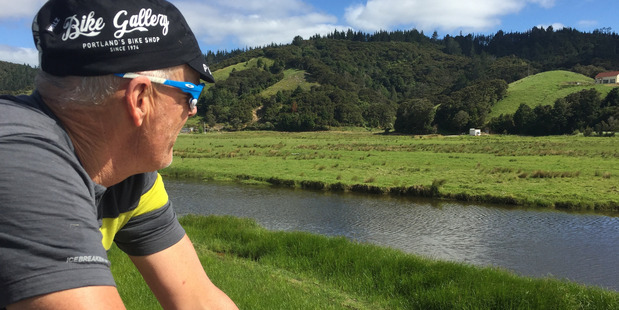
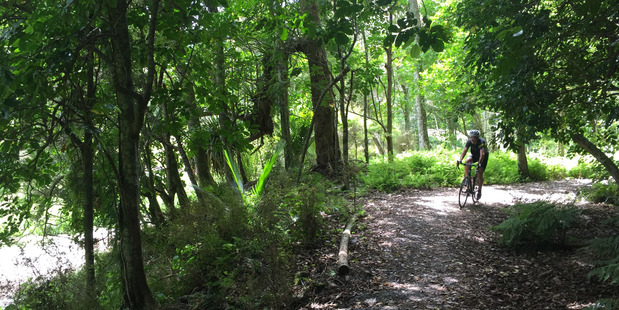
The finished trail surface is hard and fast and the route takes you past or through inlets, a lake, a river valley, bush and farmland.
“It feels like you have done a journey – from one side of the Far North to the other,” enthuses Jonathan Kennett, cycling guru, author, event organiser and trails consultant. “It will be a big attraction for people to do over two or three days.
“I think the Twin Coast Trail has the potential to rejuvenate these small towns in an even more amazing way than the Otago Rail Trail rejuvenated the small towns on its route. “And I think we will see more people use the Twin Coast Trail because it is so much closer to Auckland.
“It brings the opportunity for people to discover a region that is misunderstood, both its history and its culture. “It’s the western side of this Far North trail that could do with a bit of money, and this trail will help with that.” A patient man, Ray Clarke wasn’t thinking of money when he took the punt a few years ago and set up bike hire business Top Trail. Clarke, who owned Paper Plus in Kaikohe for 21 years, selling it in 2001, was able to keep the fledgling bike business going only because he has other income.
He predicts Okaihau will quickly thrive. “It’s got the right vibe for a town that is set to do quite well out of the cycle trail, and the right sort of people to pick up from it early on.”
“I think the other towns, Kaikohe and Horeke and Moerewa will probably do okay too in time, but they might need to be led a bit more.”
Horeke, the destination town if you ride west, has a depth of history and culture, but lacks services.
Destination rides need a happy ending and Horeke, on the upper reaches of the Hokianga Harbour, has the natural attributes. It is a beautiful and historic spot, the site of the first Post Office (still standing) and the biggest signing (at the Mission House on the hill) by Maori chiefs of the Treaty of Waitangi.
With the waters of the Hokianga lapping at its feet, the Horeke pub may have the county’s prettiest beer garden. But right now, the town isn’t ready. The pub opens limited hours, there is no cafe or shop, or ferry service to Rawene, a bustling town that is near by water but far by road.
“The horse has to come before the cart down there, and for a lot of the trail as well,” says Clarke. “Horeke could be such a gem and such a fantastic end to the ride.”
“One of our locals who is in tourism up here likened the trail to a river with all these fish swimming up it. All that is needed is for locals to bait their hooks and put their lines in the water.”
Trail Highlights:
Best Section:
The Utakura Valley, between Okaihau and Horeke. This section follows the river through kauri forest and farmland. It was made possible by the generosity of private landowners (the Lewis, Lykho, Harrison, MacMillan and Taylor families) who granted easements to allow the trail through their land as the rail corridor didn’t come this way. The trail drops into the valley and follows the Utakura River on its journey from its source near Kaikohe to the Hokianga Harbour.
Best feature
The 1.25 km boardwalk near Horeke, the longest boardwalk built on any trail in New Zealand.
Best place to stay
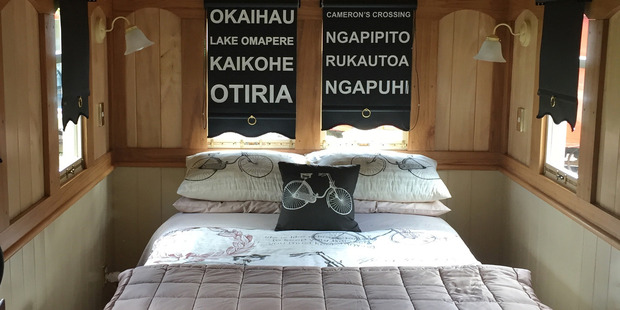
Okaihau Rail Stay (09 401 9770, inverarity@xtra.co.nz) just west of the town. Noelene and Pete Inverarity have turned abandoned rail carriages into striking boutique accommodation. Noelene noticed the bike trail went right past their front gate and took a punt that their investment in sweat and dollars would eventually pay off. If you let Noeline know in advance, she may even cook your dinner.
Best Cafe
Railway Station Cafe, Kawakawa. Cute as a button, good coffee, beans roasted in nearby Kerikeri, generous big breakfast.
Cyclefile
The New Zealand Cycle Trail was initially conceived as a trail to run through the length of New Zealand. Practicalities and cost saw it adapted to became a network of Great Rides (currently 22).
Proposed by former Prime Minister John Key at the Job Summit in 2009 to help the country through the international financial crisis, it was granted $50 million by the Government to get it started. A further $30 million has come from local government and cycle trail trusts.
Together these trails total nearly 2500 kilometres.
The Twin Coast Trail budget was $13 million in 2011. Central Government has contributed $7 million.
For those wanting to ride the length of the country, cycling promoters and authors, the Kennett brothers have designed a route using back roads and some of the trails. You can find it at: http://www.touraotearoa.nz/p/map_22.html




 Utakura 7 Incorporation